

Clinical Pathologist
TITLE
INDUSTRY
Life Sciences
COMPANY/PROGRAM
Mayo Clinic

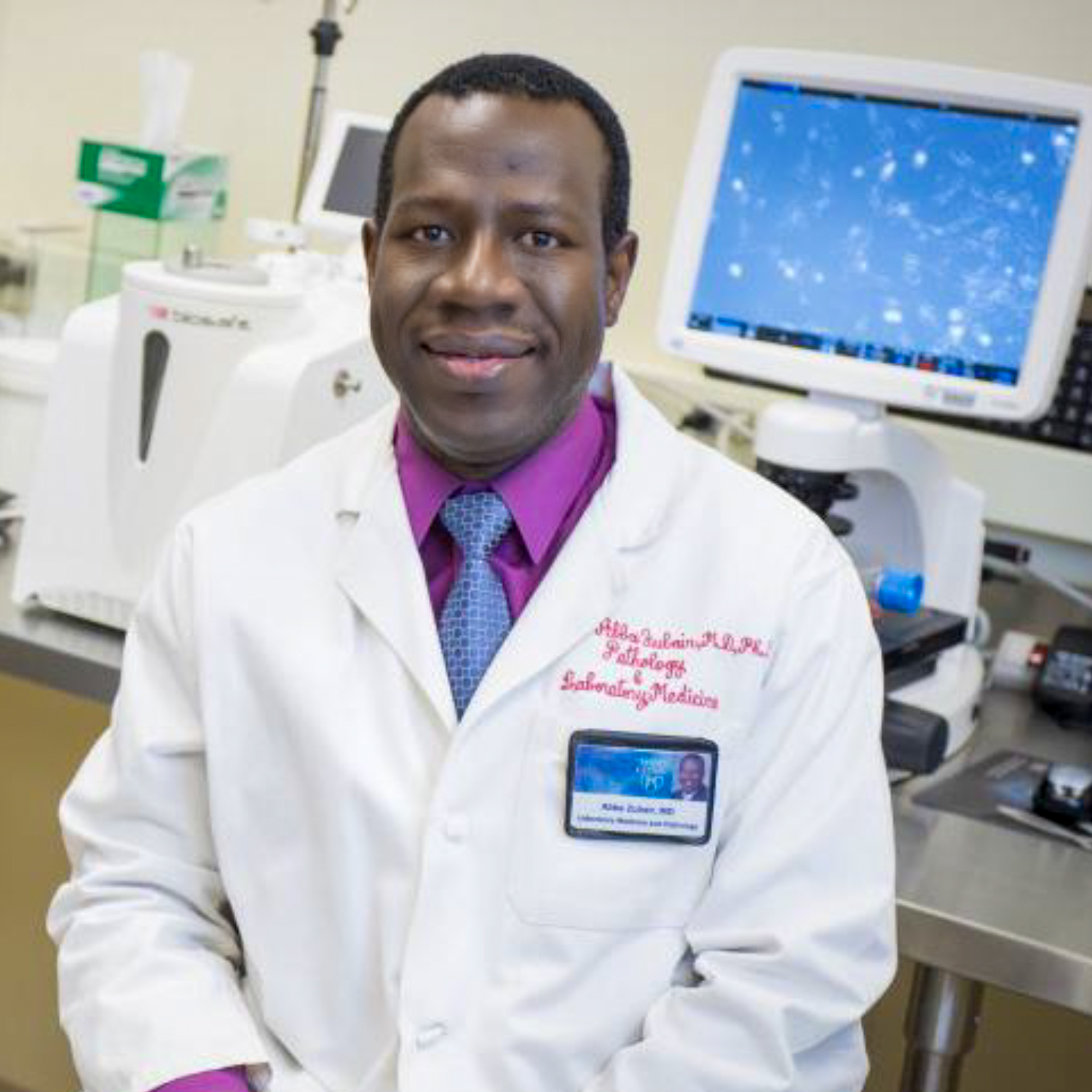
Dr. Abba Zubair, MD, PhD is a Clinical Pathologist specializing in Transfusion Medicine and stem cell research at Mayo Clinic. Dr. Zubair grew up in Nigeria, Africa fascinated by the dream of being an astronaut. A student advisor told him that he was smart and could do anything, but to pick something else. After all, Nigeria wasn’t sending rockets into the air.
Events in Dr. Zubair’s young life prompted a shift from becoming an astronaut into an interest in healthcare. He chose to be a doctor and began his studies in England. As a student, Dr. Zubair got a green card through the lottery system and pursued his education in the United States. At the University of Pennsylvania School of Medicine and Harvard Medical School, he studied tumor immunology, pathology and laboratory medicine, and transfusion medicine. He worked at Brigham & Women, Dana Farber Cancer Center and Boston Children’s Hospital while at Harvard before moving to Jacksonville.
Despite Dr. Zubair’s numerous research activities, publications, professional memberships and various lectureships and awards, interacting with high school and college students through programs and mentorship is extremely satisfying. “It’s exciting to talk to new generations and encourage them to open their eyes and see that the sky’s the limit.”
Recently, Dr. Zubair’s research has launched into space. Collaborating with the Florida Program Research in Space and the ISS National Laboratory Center for Advancement of Science in Space, he submitted a grant to test a basic research idea and translate it to patient care. The premise: studying cell behavior in space may lead to new therapies to treat stroke patients, specifically those with hemorrhagic stroke. From a research perspective, it takes months to grow cells. So, what is the effect of zero gravity on the growth of stem cells? Would cells grow faster and be safe to use for human application?
“Space research is totally different,” Dr. Zubair indicated. “Simple activities must be re-engineered and tested for effectiveness. One rocket carries everything, from food to military hardware and research materials—you are competing with others who want to be on the shuttle at Kennedy Space Center. It may take months to years to get your project up to the top of the queue. You use astronauts to conduct your research project, some of whom need training.”
In space, cells are grown, fed, and harvested. Photos of cells were taken and shared in real time to study behavior. Dr. Zubair’s team has an exact replica of the space study in the Mayo lab as a control. Staff go to the lab at night to feed the cells at the same time to mirror the feeding times of cells in space.
Many space samples have returned via a capsule that lands by balloon into the ocean. It’s retrieved out of the ocean and Fed Ex’ed to the Mayo lab. Dr. Zubair stated that the real action starts when sample comes back and is compared to lab grown cells.
Dr. Zubair’s team is organizing space data and synthesizing findings. Of the more than fifteen thousands genes analyzed, up to seven thousand were impacted by being in space. The evaluations showed short-term exposure to radiation in space did not cause significant cell damage or cause them to become cancerous. Out of the three types of cells studied, one
type showed enhanced immune suppressive property which suggests it can be used in preventing rejection of organs and controlling inflammation. Dr. Zubair said he and this team will need to re-test this study in space before drawing conclusions. This process will take time—years in fact—before patients can be treated with space-grown cells.
Dr. Zubair has lived in Jacksonville for 17 years. He emphasized that Florida is an ideal location to pursue a biomedical career involving space research, due to Mayo’s proximity to the Kennedy Center. Of pursuing the biomedical field, he stresses, “Never waste time. Get all of the credentials you need quickly. Education is like a marathon. There will be a struggle, so you can’t focus on the immediate. There is joy in the journey. Go where the opportunities are that excite you. It may look painful going to class and taking exams, but when you achieve your goal, you’ll appreciate it.”
Wanting a life that looked more like an action movie, with frequent plot twists and turns, Dr. Zubair has found joy in biomedicine. He proves that realizing your dreams may not take the shape you initially intended. Dr. Zubair hasn’t set foot in space, but his work has travelled there and back.
For more, watch the video at https://www.issnationallab.org/blog/stem-cell-research-results-published-zubair/
More Life Sciences Spotlights

Stacey Nemeth
Stacey Nemeth
D’Angelo Williams
D’Angelo Williams
Amber Gainer
Amber Gainer

Christopher Carter
Christopher Carter
Lorraine De Chavez
Lorraine De Chavez
Kensley Hoover
Kensley Hoover
Loveann Burch
Loveann Burch

Brad Nazworth
Brad Nazworth
Stacey Prince
Stacey Prince
Sarah Elam
Sarah Elam
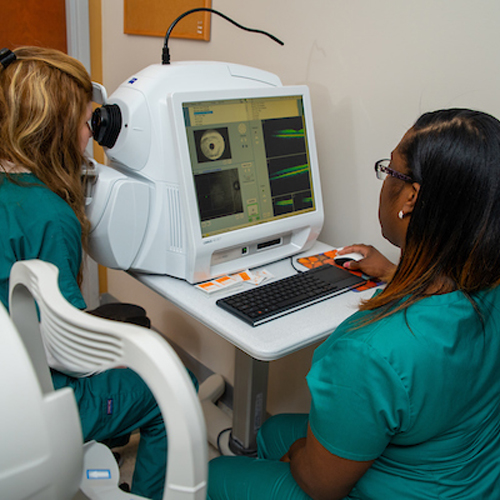
Opthalmic Technician Program
Opthalmic Technician Program
Matthew Steinmetz
Matthew Steinmetz
Kat Hasanovic
Kat Hasanovic
Sammie Fendig
Sammie Fendig

Guidewell
Guidewell
Almira
Almira
Mandarin High School Health Science Academy
Mandarin High School Health Science Academy
Brandi Zofkie